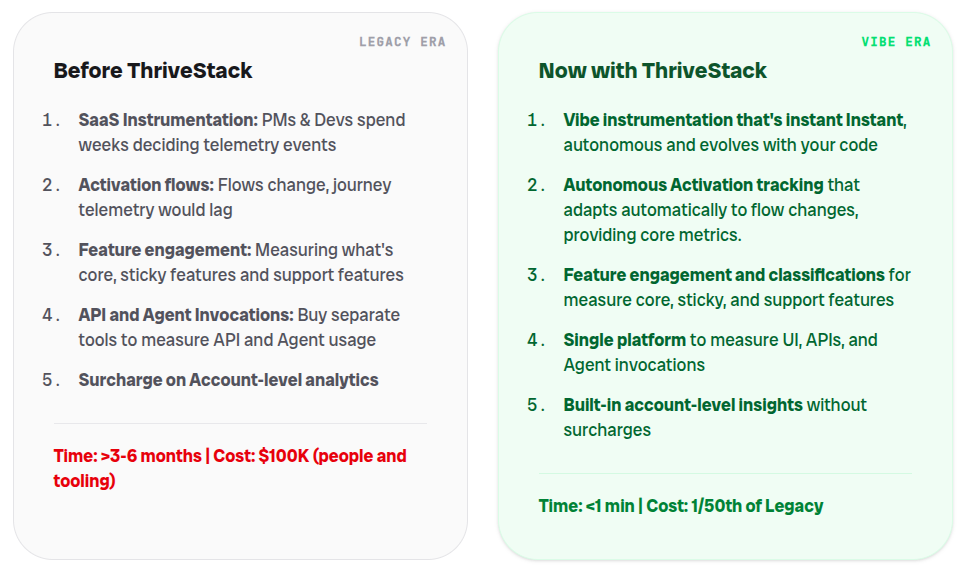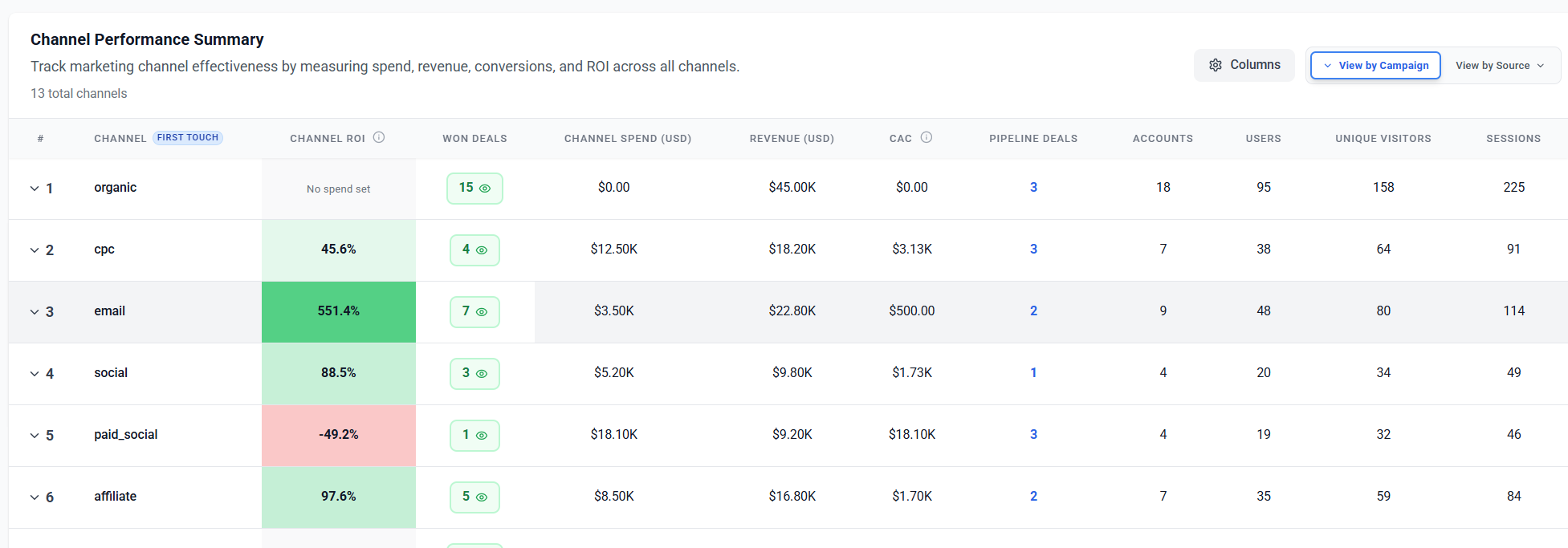
In the world of AI-speed, the window to convert a lead or save a churning customer is shrinking from days to minutes. To compete, organizations must transform faster than ever—but doing so by throwing more headcount at the problem is a legacy mindset. Success in 2026 requires a leaner team that spends its time on high-leverage strategy, not manual data plumbing.
The Hidden Price of "Building it Yourself"
When your marketing data lives in Webflow/GA, product engagement in Amplitude, sales deals in a CRM, billing in Stripe, and support tickets in Jira, you don’t have a unified view of your customer—you have a puzzle with missing pieces. For a lean RevOps team, trying to manually correlate these signals is like trying to build an airplane while it’s already mid-flight.
Many teams underestimate the true cost of manual data unification. Before you even see your first dashboard, you’re looking at a staggering bill for the "Modern Data Stack" and the talent required to babysit it.
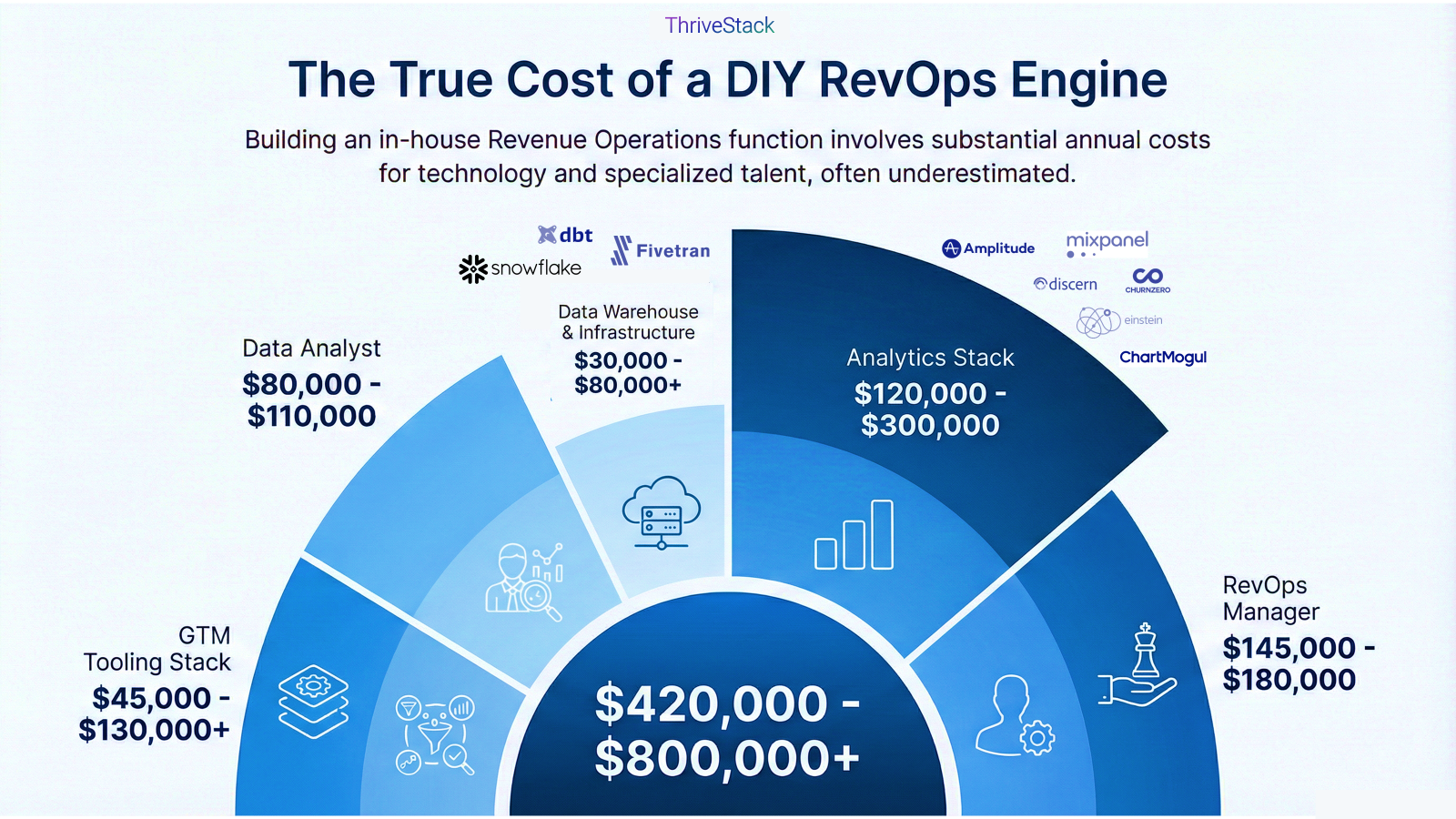
Note: This doesn't include "Opportunity Cost"—the revenue lost while your team spends 60% of their week cleaning data instead of optimizing the sales funnel.
The Lean Ops Reality Check: Spending nearly half a million dollars just to see your data is the opposite of agile. Every hour your Analyst spends writing SQL to join Stripe IDs to Amplitude UUIDs to Website visitor_IDs is an hour they aren't finding revenue opportunities.
The Top 4 "Nasty" Issues Every RevOps Team Faces
1. Identity Fragmentation: Marketing-to-Product-to-Revenue Attribution
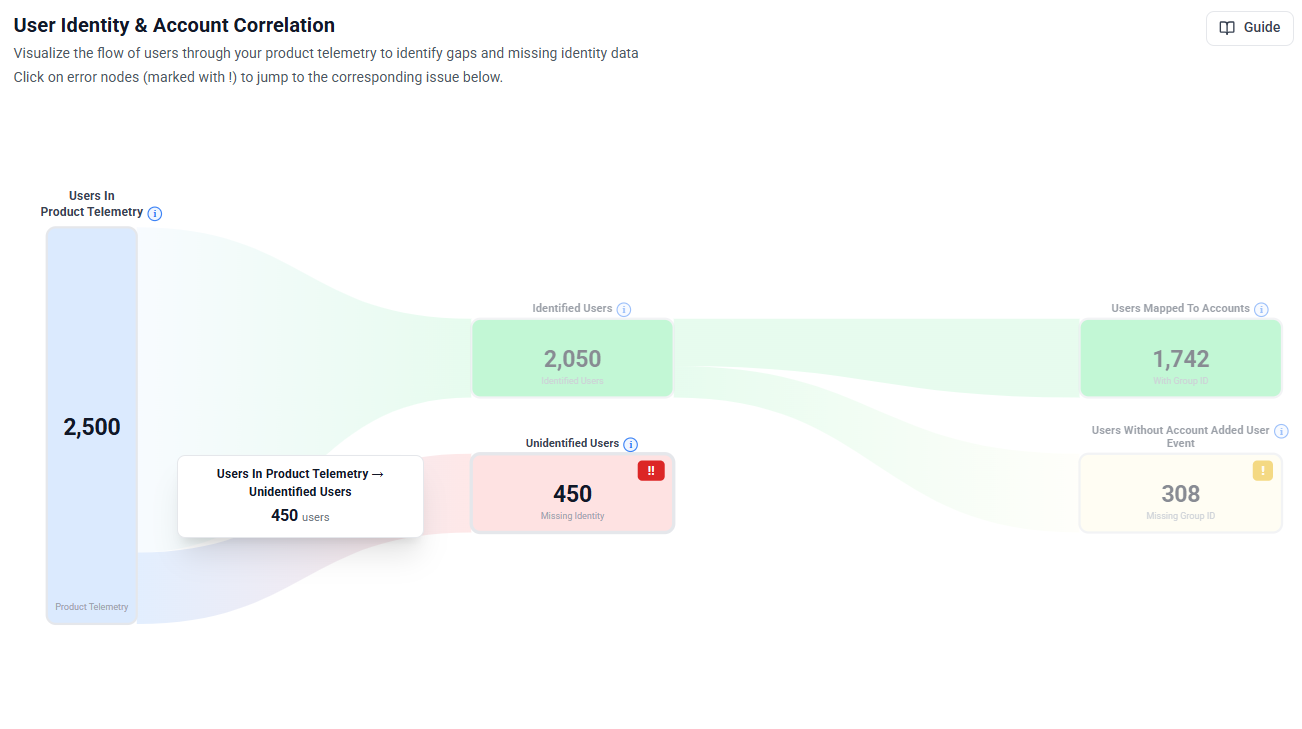
- The Problem: A user is a
lead_idin CRM, avisitor_idin Webflow/Marketing analytics, auser_idin Product Telemetry and acustomer_idin Stripe. Without a unified thread, you can't prove which marketing campaign drove feature adoption or revenue. - The ThriveStack Solution: ThriveStack’s User Identity & Account Correlation engine automatically maps these disparate IDs into a single source of truth. It flags exactly where the chain breaks, such as the "Unidentified Users" shown below, so you can fix attribution in minutes, not months.
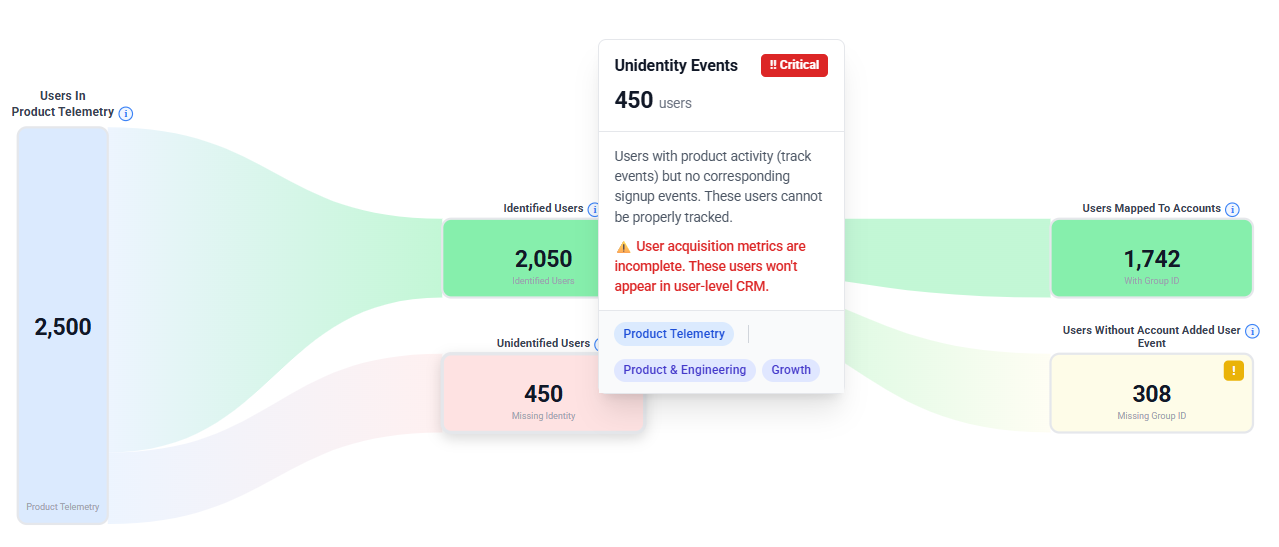
When these issues are resolved, the user journey is completely stitched.

Time To Acquisition:
Check out the Visitor to User journey from first touch (on Marketing Website) till Product Signup and everything in between
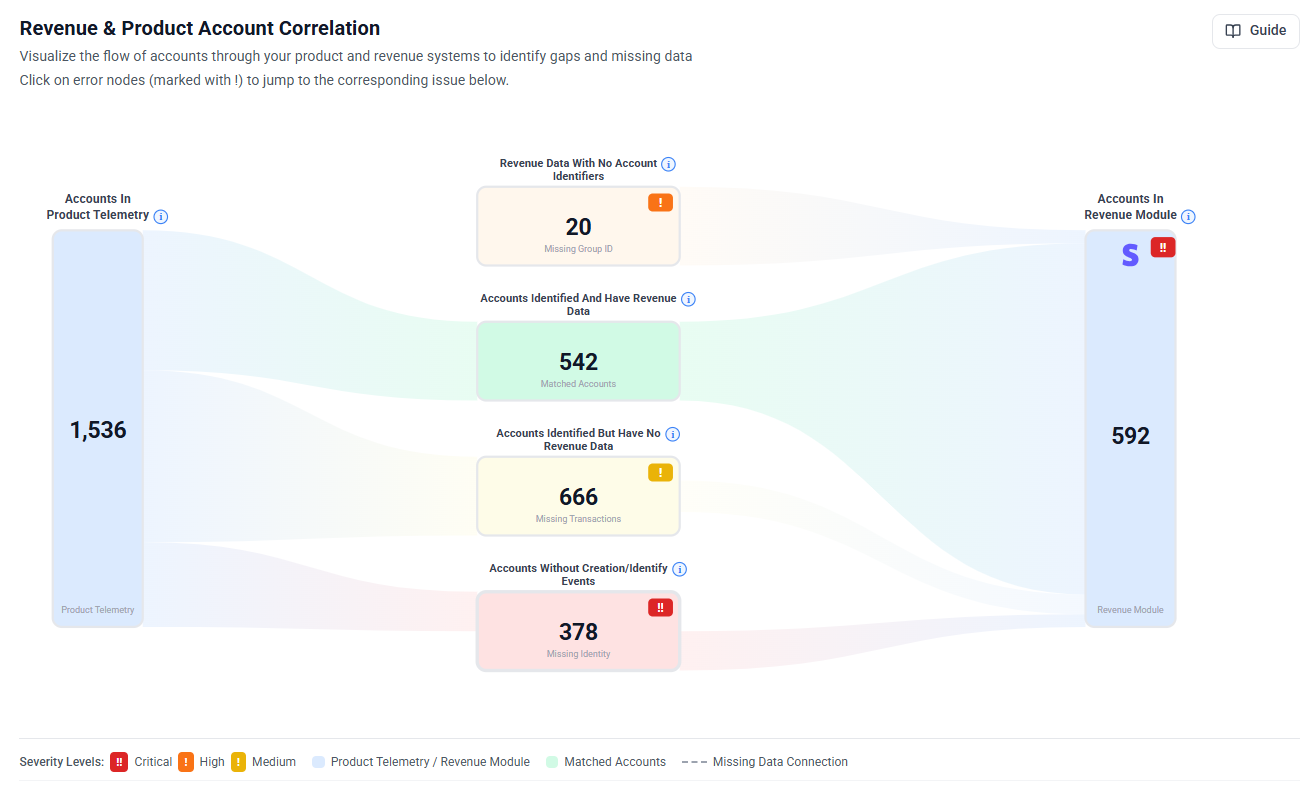
2. The Product-to-Payment Correlation (Stripe to Group_ID)
- The Problem: Billing systems (Stripe) don't understand "Product Consumption." If billing data isn't correlated to product telemetry
Group_IDs, you can't automate seat-based expansion or catch "zombie" paying accounts.
- The ThriveStack Solution: As seen in our Revenue & Product Correlation flow, ThriveStack bridges the gap between telemetry and the Revenue Module. It highlights "Missing Transactions" or "Missing Group IDs" (like the 666 accounts identified below) so you can align what customers pay with what they actually do.
3. User & Account Correlation (The Account-Level Analytics)
- The Problem: In B2B, individual users belong to a Company. If this relationship isn't established at ingestion, account-level analytics is impossible. You see fragmented clicks instead of healthy (or at-risk) accounts.
- The ThriveStack Solution: ThriveStack enforces User-to-Account mapping at the infrastructure level. The dashboard visualizes the flow of users into identified account buckets, ensuring that every piece of telemetry is attributed to a business entity from day one.
4. The Data Warehouse Infrastructure Tax
- The Problem: Standing up Snowflake, dbt, and Fivetran is a full-time job. RevOps teams get bogged down in "Data Engineering" (fixing broken pipelines) rather than "Revenue Operations."
- The ThriveStack Solution: ThriveStack replaces the need for a complex, manual warehouse setup with an out-of-the-box correlation engine. Our Integration Health center monitors your connections for you. If a Stripe sync fails, you get an alert—no Data Engineer required.
Solve the Correlation Chaos with ThriveStack
If you're spending $600k+ on talent and tools just to see your data, it's time for a change. ThriveStack acts as the automated intelligence layer that correlates these disparate signals in real-time.
Are you ready to stop manual data stitching and start growing? Book a free session for a RevOps Review