Going from $0 → $3M requires hustle. Going from $3M → $30M requires alignment.
Reaching $1M ARR is a testament to Founder's hustle. It’s about founder-led sales, brute-force marketing, and sheer will.
But reaching >$5M ARR requires something entirely different.
If you look at the graveyard of B2B SaaS companies, you will find it is most crowded with startups that died between $3M and $5M ARR.
We call this "The Growth Chasm."
At this stage, the tactics that got you here won't get you there. In fact, they usually break the company.
After analyzing the growth journeys of scaling SaaS companies, we found that the stall doesn't happen because of a lack of product-market fit. It happens because of a specific operational failure: The Growth Architecture Failure.
Jacco van der Kooij from Winning by Design teaches this in his Growth Architecture Workshop series https://winningbydesign.com/.
The Root Cause: The "Silo" Trap
Here is why you are stalling, the expensive mistake most founders make to fix it, and the "intelligent" way to break through.
When you are small, everyone sits in the same room (or Zoom). Marketing knows what Sales is doing, and Product knows what customers are complaining about.
But as you scale toward $5M, you build departments. And inadvertently, you build silos.
• Marketing optimizes for traffic, MQLs. (leans more towards vanity metrics)
• Sales optimizes for Closed-Won.
• Product optimizes for Daily Active Users (DAU).
On paper, everyone is hitting their numbers. But revenue stalls. Why?
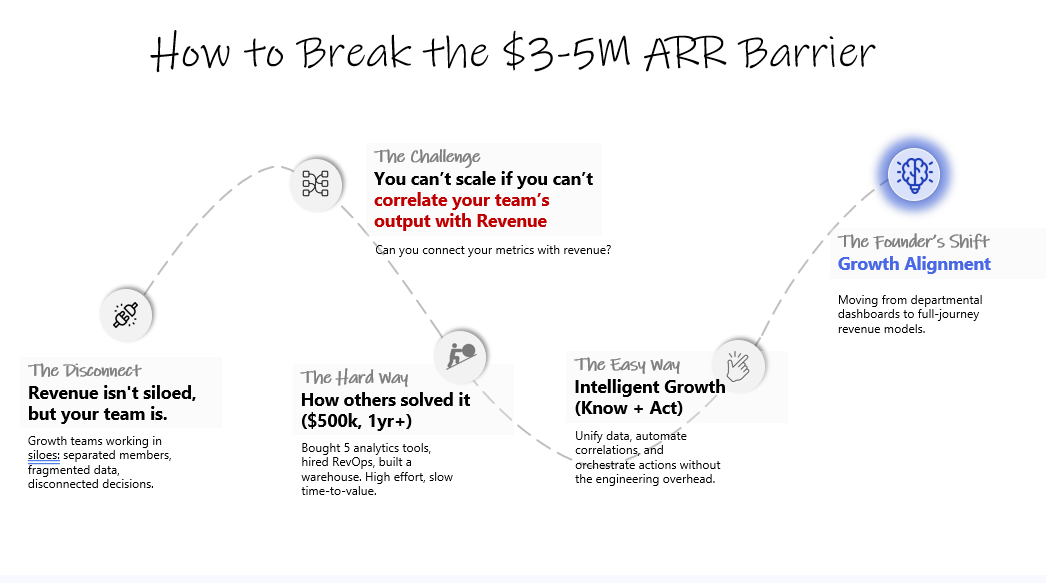
Because Revenue isn't a siloed metric, but your team is.
No one is tracking the thread that connects them. It used to be you, The Founder. But now you are blindsided.
You have revenue data in one system, usage data in another, and marketing data in a third. If you cannot correlate your team’s output (features shipped, leads generated) with Revenue outcomes (Retention, LTV), you aren't scaling. You are guessing.
The Correlations
Here's 2 examples of why you need to correlate "Department's output to Revenue" and make decisions that span beyond a specific department
1. Cross-Functional Acquisition Intelligence
The Old Question: "How many leads did we get?" The Growth Question: "Which specific marketing channel drove the highest LTV?"
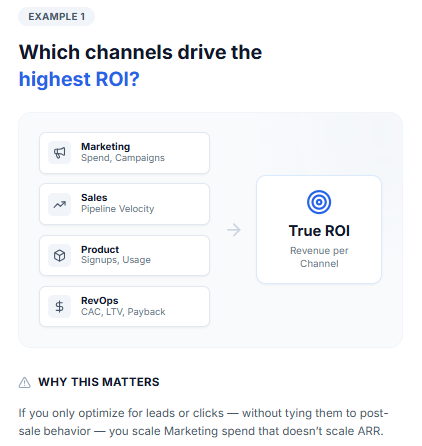
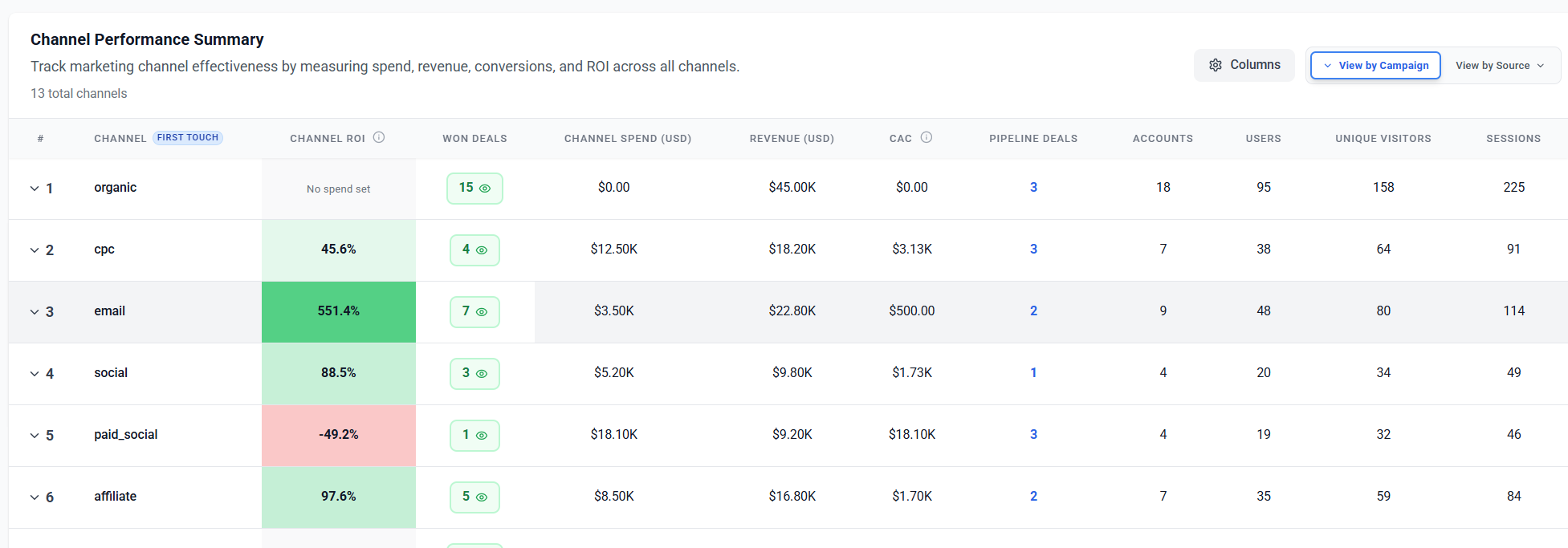
To answer this, you must connect Marketing (Spend) + Sales (Closed Won) + Product (Activation).
If you can see that LinkedIn Ads drive 100 leads, but only 2% activate, while SEO drives 50 leads but 40% activate, you stop optimizing for volume and start optimizing for revenue.
ThriveStack's Channel Performance Report (Experience w/o signing up)
2. Cross-Functional Retention Intelligence
The Old Question: "What is our churn rate?" The Growth Question: "Which customer segment is showing contraction signals before they churn?"

To answer this, you must connect Account Firmographics (HQ Location, Revenue, Industry etc.) + Product (Usage Drops) + Billing (Seat Shrinkage) + Revenue (Renewal Date).
If you can identify that a specific segment reduces Churn 30 days before renewal, you can trigger an automated success play. That is the difference between a post-mortem and a save.
Here's an example of At Risk Customers List (sample data) from ThriveStack, that makes it very easy to retain.
The $500k Mistake: "The Hard Way"
When founders realize this disconnect, they usually panic. They try to brute-force a solution using what we call "The Hard Way."
I see this roadmap constantly:
1. Buy 5 different analytics tools (One each for Marketing, Product, Churn, Revenue, Sales).
2. Hire a RevOps team (Expensive and hard to find).
3. Build a Data Warehouse to centralize everything.
4. Buy a CDP to connect the 5 analytics tools to Data warehouse
5. Start building Correlations
Here's 2 examples, ($ amounts are normalized to US market resources)
- Rodrigo Fernandez , then VP of TimeDoctor and now at ProductLed
- Michael Kuhl, VP of Growth Analytics at AppFire.
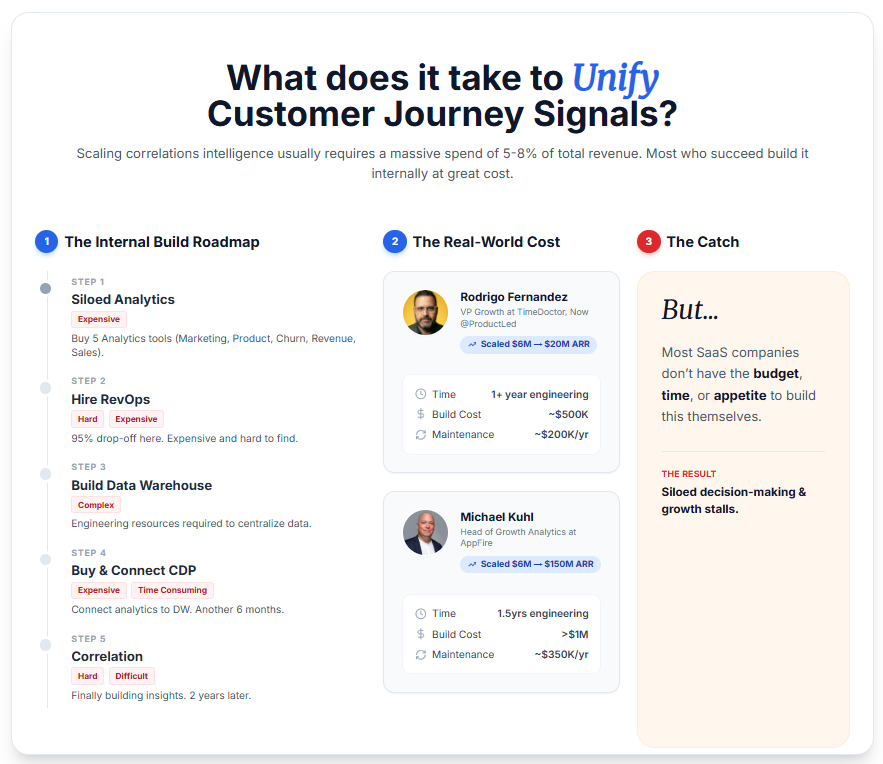
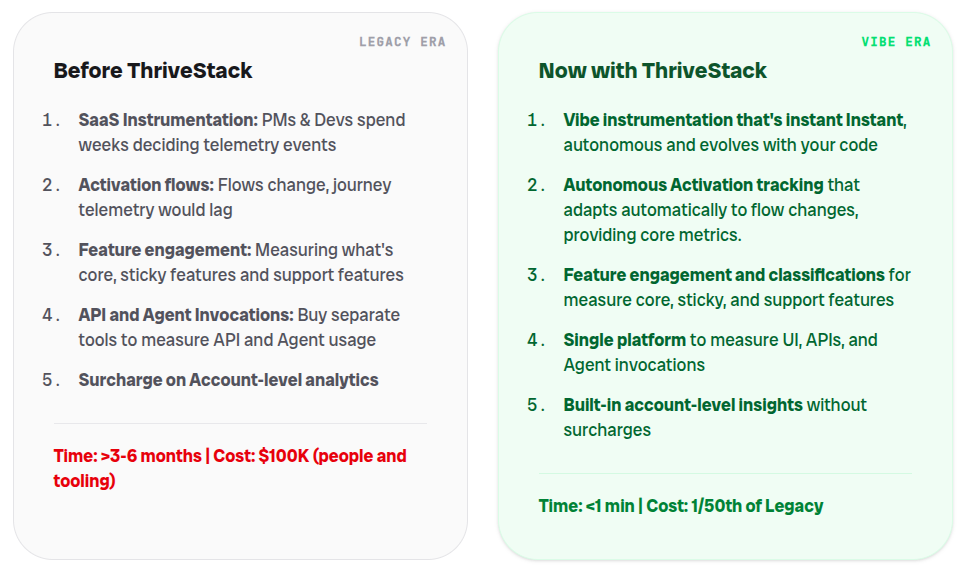
The Cost: Roughly >$500,000 and 12+ months of engineering time.,
The Result: After a year of building, you often end up with a shiny warehouse that acts as a "data graveyard." You still have siloed decision-making because the data isn't actionable in real-time. You have built a reporting engine, not a growth engine.
Most Series A/B startups do not have the budget, time, or appetite to build this infrastructure from scratch.
The Solution: Intelligent Growth (The "Easy Way")
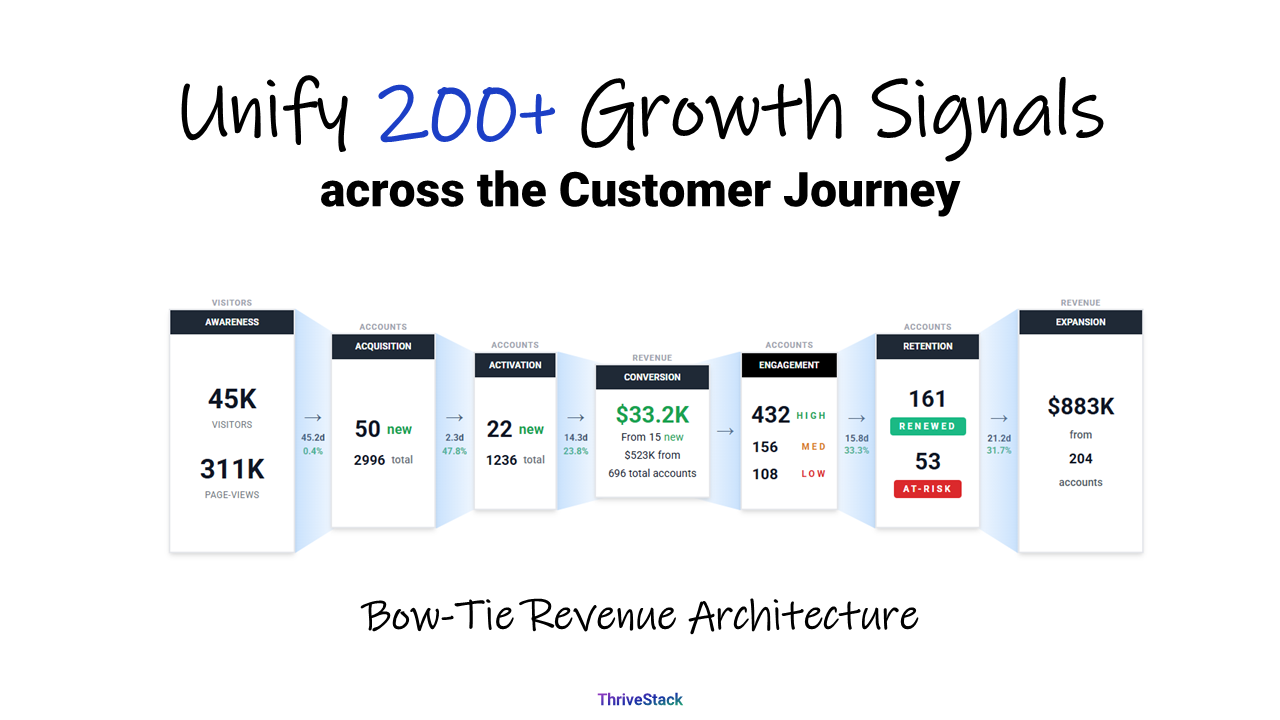
The companies that cross the $10M ARR mark don't just build dashboards. They shift from "Departmental Analytics" to "Full-Journey Revenue Models."
They stop trying to aggregate all data and start trying to correlate the right signals. This is the shift to Intelligent Growth.
Instead of a 12-month warehouse project, they focus on unifying three specific layers of the stack to answer high-value questions immediately.
How to execute this (Without the $500k price tag)
You don't need a year of engineering. You need a shift in mindset and architecture. The framework for Intelligent Growth is simple:
1. Unify: Connect your growth data (Ads, CRM, Product, Billing) via a common identifier (like a unified Account ID).
2. Correlate: Stop looking at static reports. Use a correlation engine to see how an action in "Step A" (e.g., a specific feature usage) predicts a result in "Step Z" (e.g., expansion revenue).
3. Act: Don't just stare at the data. Orchestrate actions. If a high-value account drops usage, alert the CS team automatically. If a trial user hits a "magic moment," alert Sales immediately.
The Founder's Shift
Crossing the chasm isn't about working harder. It's about alignment.
You need to move your company from "Departmental Dashboards" to a "Unified Revenue Engine."
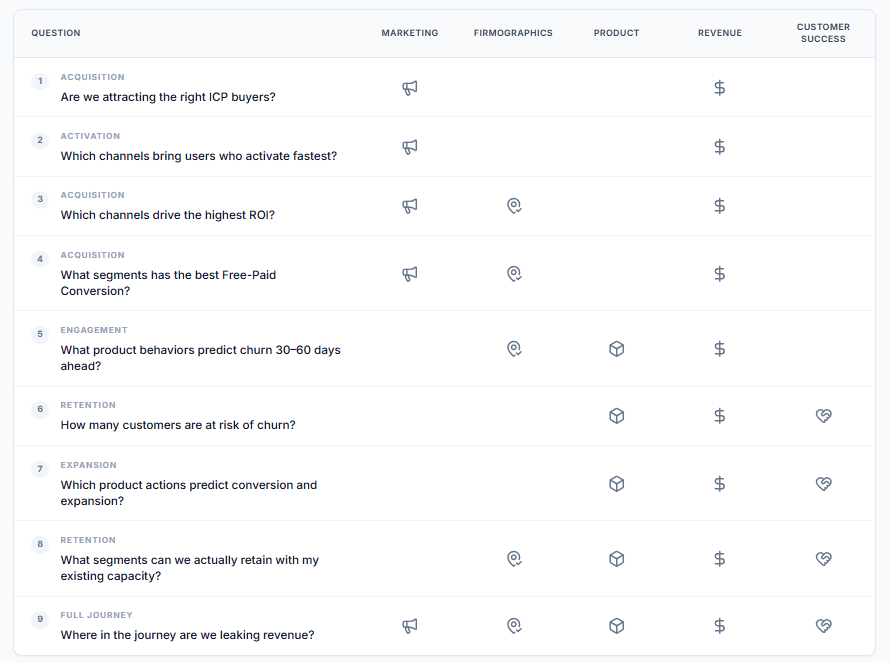
Bonus: Here are the 9 Cross-Functional Questions SaaS Companies Can’t Answer with Siloed Analytics
If you cannot answer these confidently → you cannot scale past $3–5M ARR. Siloed analytics can only take you that far
Experience the Easy Way
If you are stuck at that frustrating $3-5M range, adding more leads at top of funnel would hardly work. Look to unify your Growth Intelligence first before you decide to double down on your Acquisition Engine.
Experience ThriveStack : All without Signing up