AI search action plan:
One ranked list across six stages
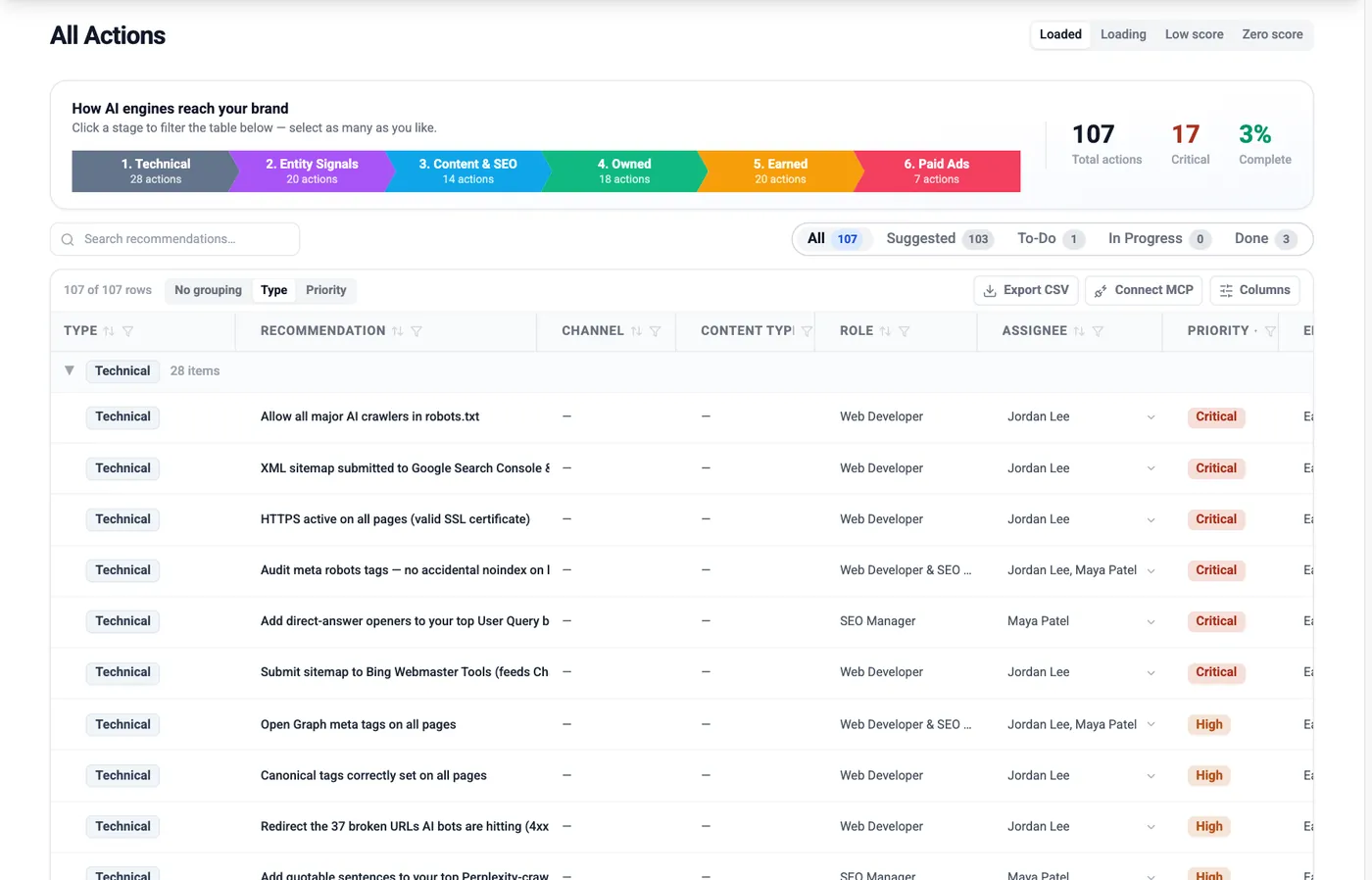
An AI search action plan puts every fix in one ranked list, in the order an engine reaches your brand: technical, entity signals, content and SEO, owned, earned and paid ads. Do the critical items first, give each one an owner, and move it from suggested to done. The demo workspace shows 107 actions, 17 of them critical.
actions in the demo workspace, across six stages
ThriveStack citedby demo, Nov 2026of those actions are marked critical
ThriveStack citedby demo, Nov 2026technical actions, the largest stage
ThriveStack citedby demo, Nov 2026paid ad plays derived from ChatGPT ads evidence
ThriveStack citedby demo, Nov 2026Why are the actions in six stages?
Each stage depends on the one before it. An engine cannot cite a page it cannot crawl, and it will not trust a page from a brand it cannot identify. So the stages run in the order an AI engine reaches your brand.
How do you read the All Actions page?
All Actions shows the six stages as a bar you can click to filter, the count of total, critical and completed actions, and one row per action with its role, owner and priority. A good sign is the critical count falling each week. A warning sign is everything sitting in Suggested with no owner.
 1234
- 1Six stages in order. Click one or more to filter the table.
- 2Total, critical and completed actions.
- 3Move each action from Suggested to To-Do, In Progress and Done.
- 4Priority: work the critical items first.
How should a team work the list each week?
Filter to critical
Click Critical, or sort by priority. Start with technical and entity items, since they unlock the rest.
Give each item an owner
Each row suggests a role, such as Web Developer, SEO Manager or CMO. Assign a person and move the item to To-Do.
Ship and mark done
Ship the fix, then mark it Done. The next audit checks it again.
Export or use MCP
Export the list as CSV, or connect your AI assistant over MCP and ask it for the top five critical actions this week.
Research for this lesson.
Our own studies behind this lesson. Each one has the key charts and numbers, and a link to the full article.
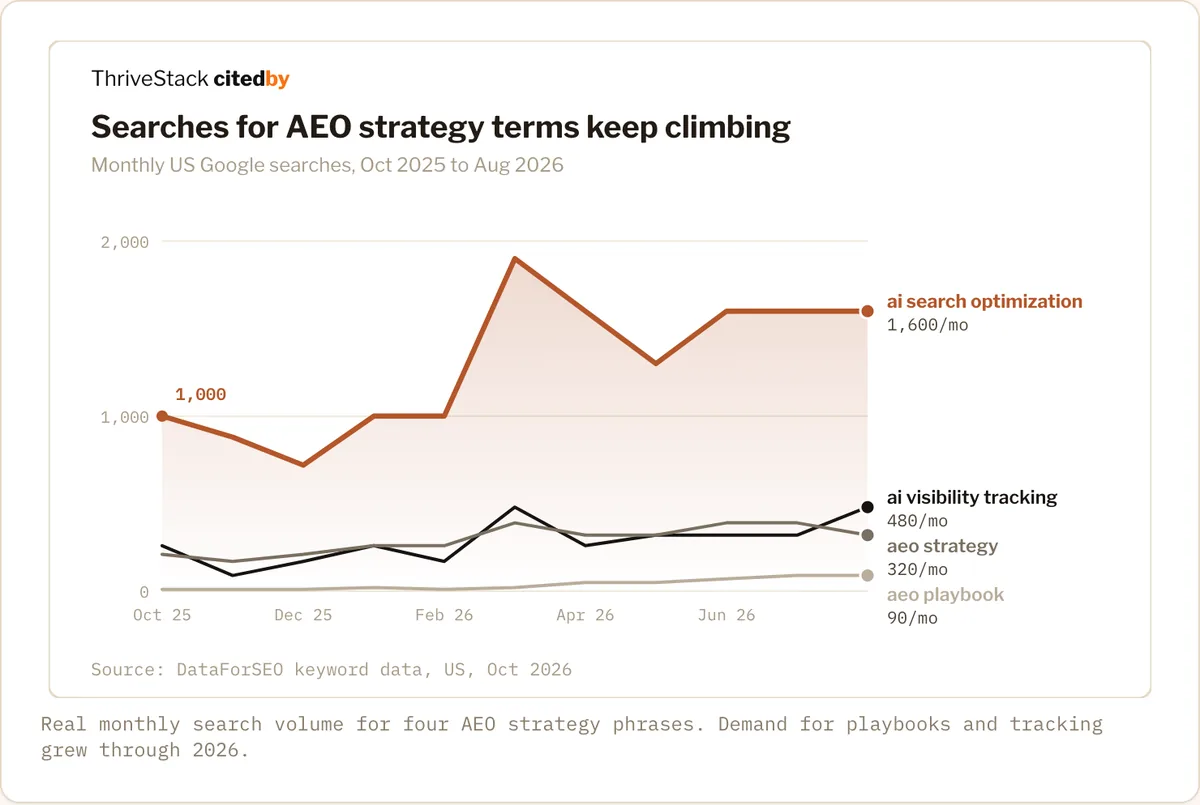
ThriveStack citedby audits your site and prompt runs, then ranks every fix in one list across technical, entity, content, owned, earned and paid, with an owner and status for each.
AI search action plan, answered.
What goes first in an AI search action plan?
Technical access, then entity signals. They are cheap and they unlock every later stage.
Who should own AI search actions?
Split by role: web developers for technical, SEO for content and entity, PR for earned, paid media for ads, and a marketing lead to keep the list moving.
How do I share the plan with my team?
Export it as CSV, or connect ThriveStack citedby to Claude or ChatGPT over MCP and ask for the list in plain words.
All 10 questions this page answers.
These questions come from a query fan-out of "how to win AI search visibility". Each one has a short answer here, and the lesson above goes deeper.
How to build an AI search visibility strategyImplementation
Pick buying-intent prompts and set a baseline. Fix technical and entity basics. Close citation gaps with owned and earned work, add ads where needed, and report to revenue. Then pick the next keyword.
90-day GEO implementation roadmapInformational
Month one: baseline, prompt panel and technical fixes. Month two: entity signals and the top owned page fixes. Month three: earned outreach, the first test and an attribution review.
AI visibility agency servicesInformational
Typical services are an audit, prompt research and tracking, technical fixes, content rewrites, digital PR and reporting. Ask how they measure lift and how they link it to revenue.
GEO workflow for marketing teamsInformational
Each week, review visibility, pick the critical actions, assign owners, ship and mark them done. Each month, report results and reset priorities.
AI search optimization budgetInformational
Conductor reports enterprises put 12% of digital spend into AEO and GEO (vendor claim). Start with tracking and technical fixes, then fund content and PR where the gaps show.
How to create an AI visibility scorecardImplementation
Build a one-page view of visibility, position, citations and share of voice by engine and topic, plus AI visits, signups and revenue, each with a trend and a target.
Who owns GEO in a marketing organization?Informational
Usually an SEO or content lead runs it, with web developers on technical work, PR on earned media, paid media on ads, and one marketing leader accountable for results.
AI search visibility reporting for CMOsInformational
Report a ladder: leading signals such as visibility and citations, quality checks, then traffic, pipeline and revenue. Keep it monthly and show trends, not single runs.
How to scale GEO across client brandsImplementation
Give each brand its own prompt panel and workspace, reuse standard audit and report templates, and use API or MCP access to pull reports for every client.
AI search visibility operating playbookInformational
Research, track, prioritize, fix, earn, pay, attribute, then repeat with the next keyword. This course is that playbook, with one pillar for each step.
Sources for this lesson
- ThriveStack docs: MCP tools reference Our own product docs
- ThriveStack citedby demo workspace: All Actions (Nov 17, 2026) Sample data
Figures were checked against each page on Nov 17, 2026. Vendor studies are labelled as vendor claims.