Win "best X" prompts:
Get on the AI shortlist for your category
"Best X" prompts are where buyers get a shortlist. Engines build it from lists, reviews, community threads and vendor pages, then name the brands those sources agree on. Build honest comparison, alternatives and pricing pages, and get onto the sources each engine cites for your category.
visits with a click on a normal result, with an AI summary and without
Pew Research Center, Jul 22, 2025runs that repeat the same brand list
SparkToro, Jan 28, 2026of Perplexity answers cite Reddit, in the sources our playbook draws on
ThriveStack citedby researchof AI citations go to earned media (vendor claim)
Muck Rack, May 8, 2026What does a "best X" answer draw on?
Take "best whatsapp mcp" from lesson 1.3. ChatGPT named five tools and cited comparison posts, GitHub repositories and official docs. The tool named first had published its own comparison two days earlier. Winning means being on the sources engines cite and giving them clear facts on your own pages.
Which pages win each kind of buying prompt?
Each buying prompt needs a page type. Read the table by prompt shape, then check that you have a page for each. A good sign is one clear page per shape. A warning sign is a single landing page trying to answer all five.
Buying prompts and the page that wins each:
Five prompt shapes, five page types
| Prompt shape | Where engines look | What to build |
|---|---|---|
| "Best X for Y" list | Your category page and third-party roundups | Honest criteria, a table, who each option fits |
| "X vs Y" | A comparison page per main rival | Feature and price table, sourced and dated |
| "X alternatives" | An alternatives page | Real options, pros and cons, yourself included |
| "X pricing" | Your pricing page in plain text | Every plan and limit as text, not images |
| "Is X good?" | Review sites and community threads | Detailed reviews and genuine replies |
How do you find the owned pages to build?
Owned recommendations list the content to publish on your site to close citation gaps, with the topic, the citation mix and the competitors winning. A good sign is items tied to buying prompts. A warning sign is a list of blog topics no tracked prompt asks about.
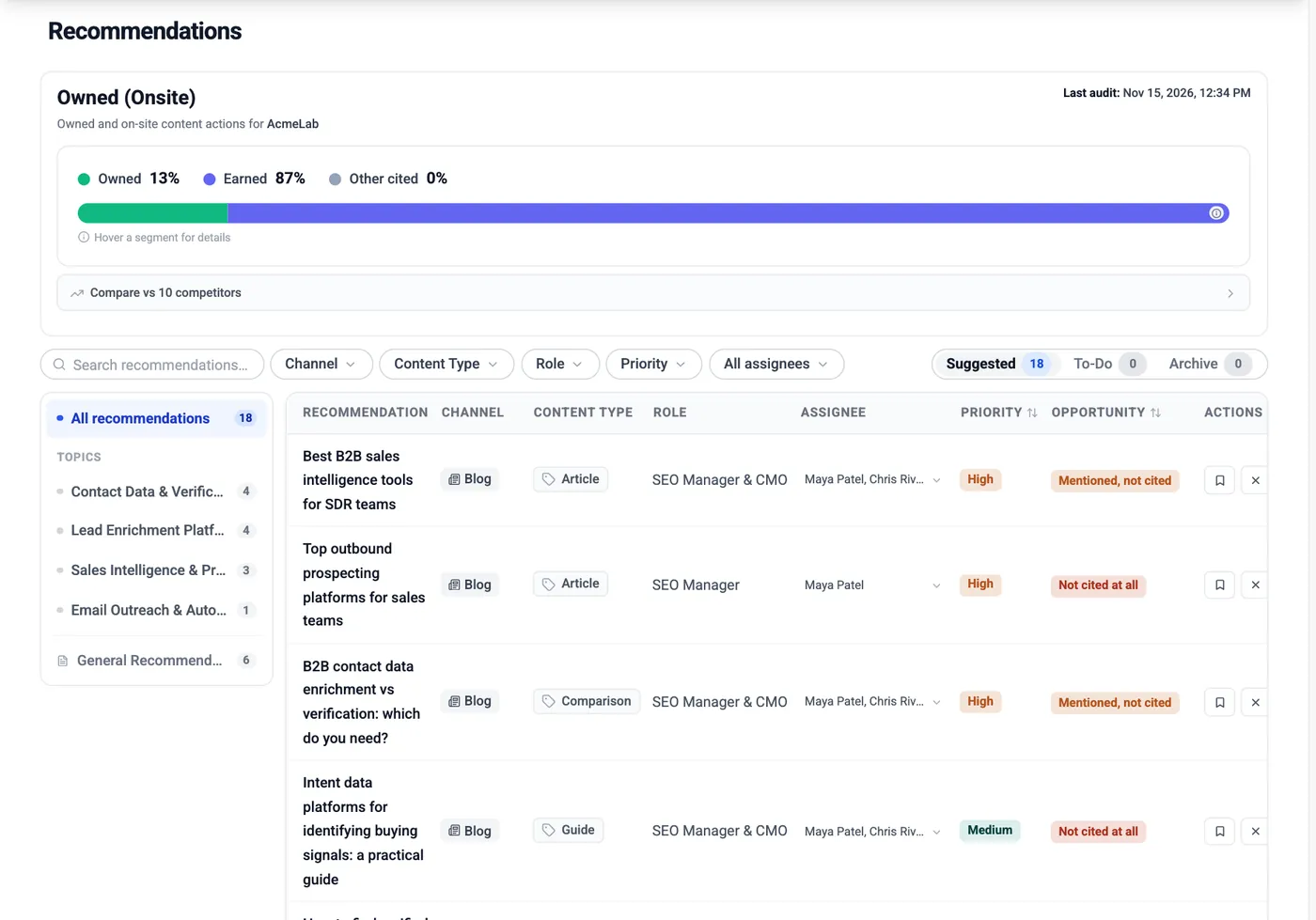 12
- 1Citation mix for the brand: owned against earned.
- 2Each recommended page, with its topic and the gap it closes.
What keeps a comparison page trusted?
- Name real rivals and say who each one fits
- Put features and prices in an HTML table with a date
- Source every claim about a rival
- Include your own limits, not only strengths
- Update when a rival changes price or features
ThriveStack citedby tracks your "best X" prompts across engines, shows who makes the shortlist and why, and lists the pages and sources that would put you on it.
All 10 questions this page answers.
These questions come from a query fan-out of "how to win AI search visibility". Each one has a short answer here, and the lesson above goes deeper.
How to appear in best software AI answersCommercial
Get onto the lists and review sites engines cite, publish an honest comparison page with clear criteria, show plain pricing and use cases, and keep your facts the same everywhere.
How to win best tools prompts in ChatGPTCommercial
Track the exact "best X" prompts, see which brands and sources ChatGPT names, then get onto those sources and fix your own pages. ChatGPT leans on press and reference sites, so pitch there too.
How to rank in AI vendor comparisonsCommercial
There is no fixed rank, since answers change run to run. Raise how often you are named: get onto cited comparison pages, publish fair comparisons with tables, and state pricing and fit plainly.
How to get recommended by PerplexityImplementation
Allow PerplexityBot, earn mentions in Reddit, Q&A and review sites, and publish comparison pages with tables. Perplexity lists many sources per answer, so wider presence gives you more chances.
Best alternatives content for AI visibilityCommercial
"X alternatives" pages answer a common buying prompt. Be fair: list real options, say who each one fits, and include yourself with honest pros and cons. Date the page and keep it current.
Competitor comparison pages for GEOInformational
Build a "you vs them" page with a table of features, pricing and fit, sourced facts and a date. Keep claims checkable, because engines compare them with the rival’s own pages.
How AI engines choose products to recommendInformational
They retrieve pages that answer the prompt, such as lists, reviews and vendor pages, then name the brands those sources agree on and that match the stated need, such as team size or budget.
How to improve AI shortlist inclusionImplementation
Get named on the sources engines cite for your category prompts. Make your fit clear for each use case, and keep pricing and features in plain text that engines can read.
AI search bottom-of-funnel optimizationInformational
Focus on commercial and transactional prompts such as "best", "vs", "pricing" and "alternatives". AI often answers informational questions without a click, while buying prompts lead to shortlists and visits.
How to get cited for product category queriesImplementation
Name your category in plain words on your home and product pages, use the same term on every profile, and get listed in category roundups and in the right review site categories.
Sources for this lesson
- Pew Research Center: Google users click less with AI summaries (Jul 22, 2025)
- SparkToro: AIs are highly inconsistent when recommending brands (Jan 28, 2026) 2,961 runs
- Muck Rack: Generative Pulse, earned media holds at 84% (May 8, 2026) Vendor claim, press release
- ThriveStack: Reddit for SEO and AI citations Our own research
- ThriveStack: Pricing page AEO Our own research
Figures were checked against each page on Nov 17, 2026. Vendor studies are labelled as vendor claims.