AI search optimization topic map:
Pillars, lessons and the keywords behind them
This course is built as a pillar and topic map, the same way we suggest you build your own content. One topic sits in the middle, seven hubs hold the lessons, and each lesson answers a cluster of real questions. The keyword table shows the search demand behind each lesson.
pillars in this course, from research to attribution
This courselessons and research pages, each answering one cluster
This coursemonthly searches for "chatgpt ads", the biggest keyword in the map
DataForSEO, Nov 2026of ChatGPT prompts matched no traditional keyword (vendor claim)
Semrush, Apr 7, 2026One topic, seven hubs, 26 lessons and 21 research pages. Each page answers a cluster of buyer questions. Hover to trace a path, click to open a page.
Build a topic map from one keyword, in four steps.
A topic map turns one keyword into pillars, clusters of related searches and one page per cluster. Here is an example, then three steps to build your own. This course is itself built as a topic map, shown in the interactive map above.
What does a pillar and topic map look like?
Here is a topic map for "best whatsapp mcp". One topic sits on top. Four pillars group the searches buyers and engines run. Each pillar becomes one page, or a few closely linked pages.
Notice where the green, commercial searches sit: choosing a tool and pricing. Those pages earn citations on buying prompts. The red, informational pillar is lowest priority.
Example topic map for "best whatsapp mcp":
One topic, four pillars, one page per cluster
Choose a tool
- best whatsapp mcpCommercial*
- best whatsapp api providerCommercial
- whatsapp api providerCommercial
→ Comparison page
Pricing and risk
- whatsapp business api pricingCommercial
- whatsapp api pricingCommercial
- whatsapp mcp ban riskInformational*
→ Pricing and FAQ page
Set up
- whatsapp mcp claudeNavigational
- whatsapp mcp serverNavigational
- whatsapp mcp githubNavigational*
→ Setup guide and README
Learn
- what is mcpInformational
- what is an mcp serverInformational
- whatsapp cloud apiInformational
→ Explainer, low priority
Intent from DataForSEO, US Google, Nov 2026. * our reading where no intent data exists.
How do you draft a topic map with ChatGPT?
Ask ChatGPT to build the query fan-out and topic map for your search query. Type your keyword in the box. The prompt updates, and the button opens ChatGPT with it filled in.
Treat the answer as a draft. ChatGPT is good at listing sub-questions and grouping them, but it does not know real search demand, so check it in step 3.
Ask ChatGPT for a fan-out and topic map:
Type your search query, then try it
Build me a full query fan-out with a topic map for the search query "best whatsapp mcp". Group the sub-queries into 4 to 6 pillars and clusters, mark the search intent of each one (informational, navigational, commercial or transactional), and suggest one page to publish for each cluster.
Opens ChatGPT in a new tab with the prompt filled in. Check its keywords against real search data in step 3.
Which keywords should you target first?
Run the draft through an SEO keyword tool and keep mainly commercial and transactional keywords. Those are searches from people choosing or buying, and the answer usually sends them to a vendor page.
Most informational questions, such as "what is mcp", get answered inside the AI reply. Pew found people clicked a link inside a Google AI summary on just 1% of visits. Keep informational pages short and link them to your commercial pages.
Keywords around "whatsapp mcp" by intent:
Target commercial and transactional first
| Keyword | Searches | Difficulty | Intent | Priority |
|---|---|---|---|---|
| whatsapp business api | 2,400 | 66 | Commercial | Target first |
| whatsapp business api pricing | 320 | 16 | Commercial | Target first |
| whatsapp api pricing | 260 | 32 | Commercial | Target first |
| best whatsapp api provider | 210 | 12 | Commercial | Target first |
| whatsapp automation tool | 210 | 1 | Commercial | Target first |
| whatsapp api provider | 170 | 18 | Commercial | Target first |
| whatsapp chatbot | 720 | 23 | Navigational | Brand and tool pages |
| whatsapp mcp | 390 | 3 | Navigational | Brand and tool pages |
| whatsapp mcp server | 170 | n/a | Navigational | Brand and tool pages |
| what is mcp | 18,100 | 29 | Informational | Low priority: answered in AI |
| what is an mcp server | 9,900 | 20 | Informational | Low priority: answered in AI |
| whatsapp api | 1,900 | 62 | Informational | Low priority: answered in AI |
How do you map each cluster to one page?
Give every cluster one page that answers it best, and list which pages exist, which need an update and which are new. The table shows how we did it for this course: each keyword maps to the lesson that targets it.
That list becomes your owned content plan, and the clusters become topics in your tracked prompt panel.
AI search optimization keywords:
12 terms, their demand and the lesson for each
| Keyword | Monthly searches | Difficulty | Intent | Lesson |
|---|---|---|---|---|
| chatgpt ads | 18,100 | 12 | Commercial | Lesson 4.7 |
| generative engine optimization | 4,400 | 44 | Informational | Lesson 1.2 |
| answer engine optimization | 2,400 | 43 | Informational | Lesson 1.2 |
| ai search optimization | 1,300 | 32 | Commercial | This course |
| llm seo | 720 | 12 | Commercial | Lesson 3.1 |
| query fan out | 590 | n/a | Informational | Lesson 1.5 |
| whatsapp mcp | 390 | 3 | Navigational | Lesson 1.3 |
| geo strategy | 390 | 9 | Informational | Lesson 1.2 |
| aeo strategy | 320 | 17 | Informational | Lesson 7.2 |
| geo course | 260 | 2 | Informational | This course |
| entity seo | 210 | 20 | Informational | Lesson 3.2 |
| ai crawler | 210 | 41 | Informational | Lesson 2.1 |
Where does your topic map live in ThriveStack citedby?
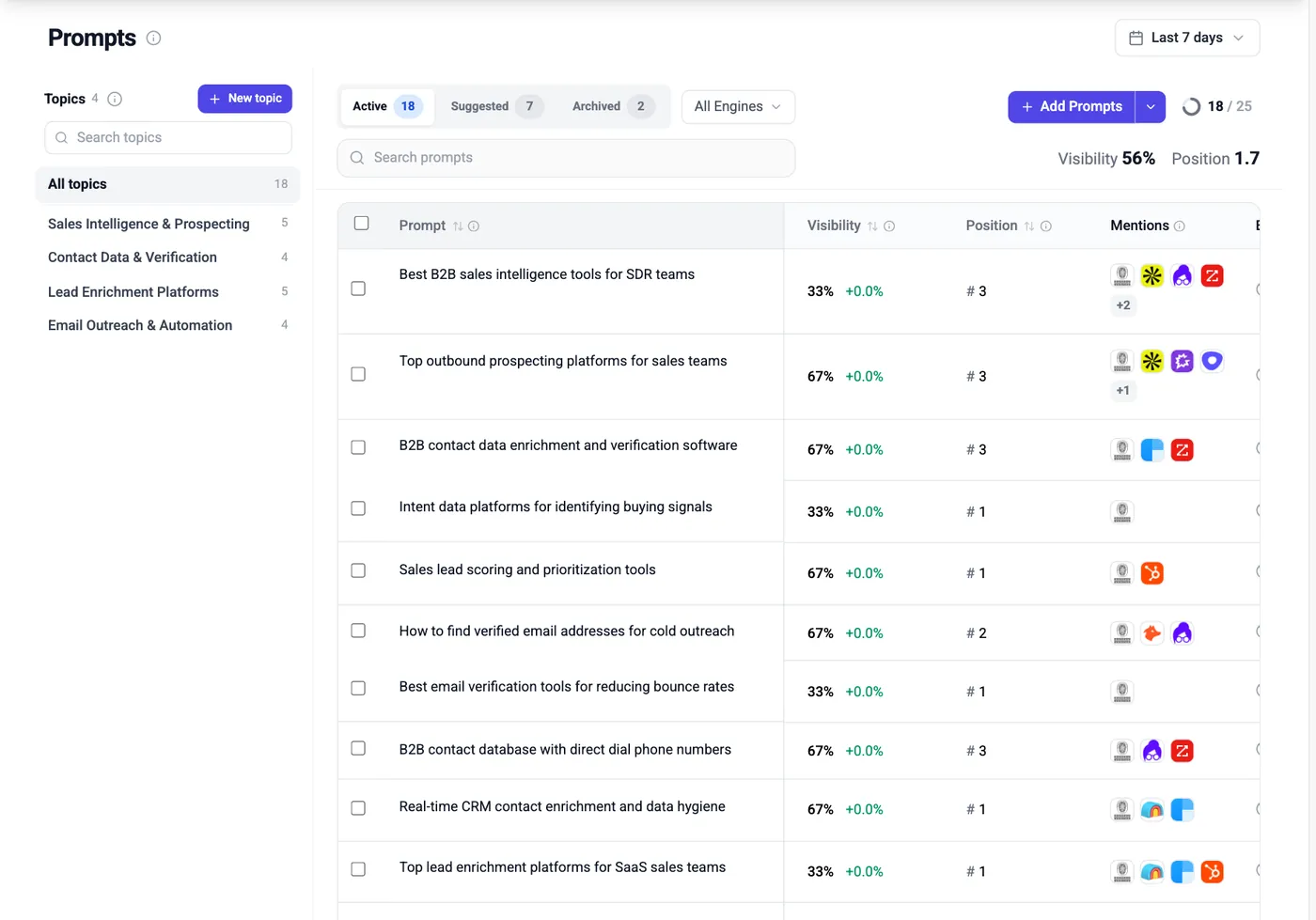
On the Prompts page, topics are your clusters. Each topic holds its prompts, with visibility and the brands each engine named. A good sign is every pillar of your map showing up as a topic with tracked prompts. A warning sign is one big topic that mixes unrelated questions.
 123
- 1Topics: the clusters of your topic map.
- 2Suggested prompts to add to a topic.
- 3The prompts inside the selected topic.
ThriveStack citedby groups your tracked prompts by topic, shows visibility per topic and engine, and suggests new topics and prompts to fill the gaps in your map.
AI search optimization topic map, answered.
What is a topic map?
A map of one topic, its pillars and the clusters of questions under each pillar, with the page that answers each cluster.
Why do AI engines care about topic maps?
Fan-out searches cover many sub-questions. A site that answers each sub-question on a clear page gives the engine more to cite.
How many questions should a cluster hold?
Start with 5 to 15. Merge clusters that a single page can answer well.
All 10 questions this page answers.
These questions come from a query fan-out of "how to win AI search visibility". Each one has a short answer here, and the lesson above goes deeper.
How to build topical authority for AI searchImplementation
Cover one topic fully. Build a pillar page with cluster pages that each answer a buyer question, link them together, add original data, and earn mentions on other sites about the same topic.
AI search topic cluster strategyInformational
Start from one keyword and expand it into the buyer prompts and fan-out searches behind it. Group them into clusters and give each cluster one page. Answer informational questions in FAQs and give commercial ones their own pages.
Pillar pages for GEOInformational
A pillar page gives the short answer for a broad topic and links to a cluster page for each subtopic. Engines get one clear entry point, and each cluster page offers a focused passage to cite.
Semantic coverage for AI visibilityInformational
Semantic coverage means you answer the related subtopics an engine’s fan-out will search, such as pricing, comparisons, setup and alternatives. The goal is that every sub-search finds a clear answer from you.
Entity-based content architectureInformational
Organize pages around the things buyers ask about: your brand, products, categories, competitors and use cases. Use the same names and facts everywhere, and link related pages so engines see how they connect.
AI search internal linking strategyInformational
Link the pillar to its clusters and each cluster back. Link related clusters to each other. Use anchor text that names the topic. Check that every page you want cited has at least one link in.
Content depth vs topical breadth for GEOCommercial
You need both. Depth makes a page worth citing, and breadth makes sure you have a page for each fan-out sub-search. Go deep on buying-intent topics first, then widen.
How to avoid keyword cannibalization in GEOImplementation
Give each cluster one page. Merge pages that answer the same question, and point the extra copy to the main page with a redirect or canonical, so engines see one clear answer.
Building topic maps for AI searchInformational
Start from a seed keyword. Expand it into prompts with ChatGPT and keyword tools, group them into pillars and clusters, mark the intent of each, and map every cluster to a page. Lesson 4.1 builds a full map for "best whatsapp mcp".
How to identify AI search content gapsImplementation
Compare the prompts you track with the pages engines cite. Where a rival or third-party page wins and you have no page, you have a gap. ThriveStack citedby lists these as owned recommendations, with the competitors winning each one.
Sources for this lesson
- Semrush: ChatGPT search insights (Apr 7, 2026) Vendor claim
- DataForSEO Labs: keyword overview, US Google (Nov 17, 2026) Our own pull
Figures were checked against each page on Nov 17, 2026. Vendor studies are labelled as vendor claims.